
RMS Driving Tests / Manual Cars
Preparing For Driving TestsRMS Driving Tests
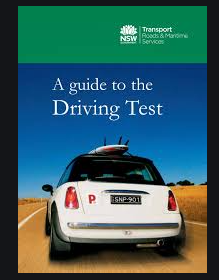


Importance of Reading and Preparing for the Driving Test
Pretest Driving Lessons
Pretest Driving Lessons are specifically designed to assist candidates in successfully passing the driving tests in NSW. These driving lessons differ from standard driving lessons by emphasising the official test criteria and requirements. Understanding and meeting these guidelines is essential, as many candidates may not succeed without adequate preparation focused on test expectations.
Pretest driving lessons are test-focused and lead to greater car wear due to repeated manoeuvres. A Pretest Driving Lesson of one hour includes two reverse parallel parks, two 3-point turns, and two or more kerbside stops, shopping centre type parking, nose first parking depending on time limits and which test centre they are attending.
Candidates often fail driving tests because they do not meet the marking requirements. To pass, it is essential to understand what assessors expect, perform manoeuvres well, make observation checks, follow road rules, and navigate roundabouts and traffic lights by making safe decisions.
The pretest driving lessons are for more so for advanced drivers because you are learning more and preparing for the driving test, so a higher skill level is required. The instructors are providing more concise information which differs for normal logbook type driving lessons as specified in the learner logbook. Pretest driving lessons are more expensive because they involve advanced preparation for the driving test.
The approach and requirements for candidates preparing for their driving test are considerably more advanced, demanding greater proficiency and understanding of the test criteria.
This distinction highlights the need for experienced instruction and tailored lesson content to ensure candidates are properly equipped to meet the expectations of driving test assessors.
Ultimately, candidates must study the materials from Transport of NSW—including the Logbook, Driving Test Guide, Road User Handbook, and Assessors Training Manual—to meet test requirements and be successful when attempting a driving test.
Penrith Driving School has been delivering car driving instruction in automatic and manual vehicles for many years throughout Penrith and the surrounding suburbs.
All candidates should be aware that the driving test is an examination assessing their understanding of road rule regulations, familiarity with test criteria, ability to operate a vehicle safely, make safe decisions and conduct various manoeuvres while following instructions provided by test assessors.
The NSW car driving test, from our perspective, expects a learner licence holder and other licence candidates to operate a vehicle in a manner that differs from how an NSW licence holder who follows the road rules typically drives.
Specifically, there are certain criteria and procedures required during the driving test that are not included or form part of the NSW road rules. This means that test candidates must adapt their driving approach to meet distinct assessment criteria standards, which go beyond standard everyday driving practices. (Obviously this doesn’t apply to drivers who disregard road rules)
Meeting Driving Test Standards
Many driving test candidates possess their own driving habits and techniques, which may be sufficient for everyday driving. However, these personal driving styles often fall short of the standards required by driving test assessors during the driving test especially in manual vehicles.
As a result, candidates who do not adapt their approach to align with official test criteria are likely to fail their driving tests. It is essential for learners or other candidates to understand and practise the specific requirements expected during the test to ensure success.
In our experience, the NSW driving test is inherently variable and, at times, unfair. This variability can result in the testing process being easier for some candidates while presenting greater challenges for others.
The only potential variable is the type of bike used during the rider assessment. The test itself is structured to evaluate the rider’s skill through a series of set manoeuvres performed within a short, defined course. There is no test on the road.
The NSW car driving test is conducted in a range of different locations and at varying times throughout the day, which means that the conditions candidates encounter are constantly changing. Candidates with the necessary skill, knowledge, and situational awareness are generally able to adapt to these changes without difficulty. However, many candidates lack sufficient skills, experience, or awareness to effectively respond to the evolving challenges posed by the driving test environment. This inexperience or lack of preparation can hinder their ability to adjust to different scenarios, ultimately impacting their performance during the driving test.
Ultimately, candidates must study the materials from Transport of NSW—including the Logbook, Driving Test Guide, Road User Handbook, and Assessors Training Manual—to meet test requirements and be successful when attempting a driving test along with already having enough skill to benefit from these lessons.These do cost more but you are getting more information in preparation for the driving test.
If you want year 7 type lessons then our normal driving lessons and or package driving lessons may be more suitable, but these do not provide driving test information. They cover the logbook requirements but do not focus on driving test requirements.
We do go to Springwood, St Marys and Richmond and occasionally Blacktown but not for lessons only for car hire which costs more due to the locations. All driving tests will have the same driving test criteria but can vary due to the test centre locations and the driving test courses.
If you are interested in these advanced driving lessons that specially focus on the driving test criteria and requirements, please contact us.
Manual Driving Lessons

Parent and Student Information
Read our information on this page about Manual Lessons
For more Information on Manual Driving lessons and RMS Driving Tests
please contact Geoff on 0426446955
Do remember we can’t take phone calls from you when we are on driving lessons.
Please leave a message on voicemail, maybe send a text or use the online enquiry form.
Thinking about learning how to drive a manual car?
Not all individuals are inclined to learn how to operate a manual transmission vehicle in contemporary times; however, it remains essential for beginners to acquire proper training from the outset. Establishing correct driving habits early prevents the formation of detrimental routines that may become ingrained over time. For those with minimal or no prior experience, learning accurate manual driving techniques is crucial. It is advisable to familiarize oneself with the RMS criteria required to pass the manual driving test during instruction.
Parents and supervisors should recognize that licensing and driving requirements have evolved significantly. While guidance from parents, grandparents, or supervisors is valuable, it is important that instruction incorporates current RMS standards to ensure compliance.
Learning to drive parallels the process of mastering a new academic subject, sport, or profession. Prospective drivers must study road rules, consult logbooks, review driving test guides, and utilize the road users handbook. Failure to understand these prerequisites may result in uncertainty regarding appropriate conduct on the road. Holders of learner licenses are expected to know relevant regulations and requirements; responsibility lies with both learners and instructors.
Instructor Geoff at Penrith Driving School teaches proper manual driving techniques. With more than 35 years of experience spanning cars, buses, and trucks, as well as credentials as a licensed motor mechanic, Geoff possesses extensive expertise in operating a wide variety of manual vehicles.
His proficiency extends to training individuals in both driving skills and workplace procedures, allowing him to effectively communicate instructional content.
Learners should demonstrate engagement, comprehension, and commitment to becoming skilled manual car drivers. Mastery of manual driving facilitates success in licensing evaluations. Geoff is well-versed in both manual operation and driving test requirements; students who exhibit competency according to his standards are likely to satisfy RMS assessors. If requirements are not met, additional practice is recommended.
This process begins with understanding the expectations set by RMS driving assessors from the outset. A foundational knowledge of manual vehicle operation is imperative for correct performance. Each lesson is structured to assess existing knowledge, identify gaps, and tailor instruction accordingly. Initial questioning allows instructors to gauge a student’s proficiency, determine starting points, and devise an effective teaching plan.
First Lessons
Typically, your initial driving lesson will be shorter, allowing the instructor to assess what needs to be taught based on your responses. We believe it’s unsafe and irresponsible to simply place someone in a car and tell them to drive—so if that’s what you expect, we might not be the right fit for you.
If you’re learning to drive a manual vehicle but feel you know more about its operation than Senior Driving Instructor Geoff or how to drive it correctly, you may not require lessons.
New drivers usually start their first lesson in a car park or open area, not on public roads. This is for everyone’s safety, as beginners need to understand manual car controls before joining traffic. Learning to drive involves developing muscle memory—automating movements through repeated practice. Once you coordinate your hands, arms, and legs without conscious effort, you’ll achieve smooth and safe control of a manual vehicle.
Geoff often encounters students who’ve taken several manual driving lessons elsewhere yet still struggle with proper driving techniques. Why can’t they “flow” with the car, understand traffic, or make safe decisions?
If a driving instructor or school lacks their own “Manual Instructor Vehicle,” they are teaching automatic transmissions, which could mean improper learning. Just so you know!
Why do learners continue to stall cars, fail to explain friction point control, or shift gears incorrectly? Why can’t they manage the car at low speeds, identify the correct gear to stop in, or coordinate shifting and steering?
Do they understand clutch coasting or transitioning at low speed? Why use a handbrake for starts on flat surfaces or slight inclines? Issues with vehicle control seem endless. It’s understandable for a new driver to lack this knowledge, but anyone taking a driving test should already possess these skills assuming they have been taught properly.
Difficulty controlling a manual vehicle can impact other driving areas, including decision-making and road awareness. What exactly are other so-called manual driving instructors teaching? Some drivers shift gears up and down without knowing why—they just go through the motions.
To drive effectively, you must understand your actions and surroundings, as many factors come into play constantly. Lack of awareness or understanding could explain struggles with driving properly.
Previous Instructors
If an instructor lacks proper driving skills, it greatly reduces the chance for a student to learn to drive safely and correctly. While a student might manage to operate a manual vehicle, doing so without sound instruction can be unsafe and may result in not meeting RMS driving test standards. Ineffective teaching can also leave students unable to control their car with confidence and accuracy.
Geoff often needs to retrain students from the ground up, as many have developed unsafe or incorrect habits. Changing these habits takes time and may require multiple lessons, as students tend to revert to what feels comfortable for them rather than adopting proper techniques.
A key part of learning to drive is the responsibility to study road rules, review your logbook if you are on one, and read through the guide to the driving test. Passing the Drivers Knowledge Test (DKT) does not necessarily mean you fully understand all road rules. If you have difficulty seeing line markings, traffic signs, or traffic lights, it may be time to visit the optometrist, since clear vision is essential for driving. Recognising hazards and responding appropriately is also a critical skill that must be learned.
Driving is a Subject to Learn
Learning to drive is like studying a subject at school. It requires commitment to both study and practice, rather than simply getting behind the wheel and expecting to succeed. Just as you would not turn up to a school exam without preparing, you cannot expect to pass the driving test without putting in the necessary effort to learn what is required. To become a competent driver, it is essential to understand the requirements such as knowing the Road Rules, Reading the Learners Logbook, Reading the Guide to the Driving Test.
Without this knowledge, you will not know how to conduct yourself appropriately on the road. Additionally, understanding how your car operates is crucial for safe driving. Cars can be dangerous if they are not handled correctly, so taking the time to learn about their functions and controls is vital. There is also the need to learn about the dynamics of the vehicle and appreciate that different driving techniques are required as road conditions change. Adapting your driving to suit the situation is a key skill that must be developed through study and experience.
Learning the Process of Driving
Learning to drive a manual car is not something mastered instantly; it is a gradual process built upon understanding and practising smaller steps over time. Each stage contributes to the overall skill of driving, and patience is essential as you develop familiarity with each aspect.
Key Manual Car Controls
In a manual vehicle, there are five main control items that a driver must learn to operate: the steering wheel, accelerator pedal, brake pedal, clutch pedal, and gear shifter. These controls work together to manage the vehicle’s movement and require careful coordination. While other features may be present in the car, they are considered accessories and do not directly affect how you drive.
Driving a manual car requires more than just knowing the controls; it demands skill and coordination to multi-task. This type of vehicle is often described as a “thinking person’s” car because it challenges the driver to manage several things at once.
Developing Sensitivity and Practice
To effectively drive, you need to learn how to listen to your car and feel how it responds to your actions. Understanding and combining the five main controls comes only through repeated practice. Over time, you’ll develop the ability to anticipate how the car will behave and adjust your actions accordingly.
The Importance of Vision
There is a sixth crucial item required for driving: vision. Your ability to see and interpret what is happening around you is fundamental. All driving decisions are based on what you observe, making vision just as important as any of the physical controls in the car.
Preparing for the RMS Driving Test
To successfully undertake the RMS driving test, students must demonstrate the ability to drive a car independently, as required by RMS assessors. This means candidates should have thorough vehicle control, a solid understanding of road rules and line markings, and the capacity to interpret complex traffic situations. Confidence in making decisions and heightened road awareness is essential for meeting the expectations of the driving test.
Instructor Intervention
Those preparing for the RMS driving test must be capable of driving a vehicle without assistance from an instructor. In practice, students who participate in “pre-testing” lessons often find it challenging to drive independently, especially when experiencing test-related pressure.
A majority of students are unfamiliar with road rules and RMS requirements because they have not adequately prepared. Manual driving lessons are beneficial for sharpening driving skills before the test. However, if students rely on help during lessons and are unable to follow instructions similar to those given by the RMS assessor, there is a risk of failing the driving test.
Are You Prepared for Manual Driving?
If you can’t meet RMS testing standards or struggle with clutch control, gear transitions at low speed, or steering while shifting, you need more practice. These basic skills are often overlooked but essential.
Rely on Your Vision
Driving depends on making quick decisions based on what you see and responding with proper controls—brakes, clutch, shifter, steering, and accelerator. Gear changes should only happen when adjusting speed. In manual cars, maintain flow and don’t stop unnecessarily.
Many students face challenges in manual driving tests because they’re unfamiliar with RMS requirements or lack road rule knowledge. We clearly explain what’s needed to improve your driving skills.
You Came to Us
When you come to us for a driving assessment, our job is to provide honest feedback based on your performance during the lesson. We observe your driving and let you know if there are areas that require improvement. This feedback is essential, as meeting RMS testing requirements is crucial for your safety and success. Listening to your instructor and taking their advice seriously is important, given that driving can be dangerous and demands a high level of skill and awareness.
Sometimes, students may feel frustrated or blame the instructor for their inability to drive properly after an assessment. However, our responsibility is to tell you the truth about your driving, based solely on what we observe during the lesson.
If you have not received adequate instruction previously or only learned part of what is necessary, you may find it challenging to meet RMS testing requirements. Ultimately, improvement comes from listening to feedback and focusing on the skills you need to develop.
Get Prepared
During driving tests, students must follow instructions (such as turning or performing maneuvers) without assistance. If the RMS assessor intervenes, it results in a fail for independent driving (marked as F6). Taking driving lessons beforehand can improve your skills and boost confidence. Remember, real driving begins after you get your licence, so prepare early for independent driving.
Driving Test Routes and Assessment Criteria
The Roads and Maritime Services (RMS) have established a variety of driving test routes throughout the Penrith area, or within the specific region relevant to your testing service. These routes are deliberately chosen to expose learner drivers to a broad spectrum of road environments, ensuring that each candidate is evaluated on all fundamental aspects of safe driving. The selection aims to reflect real-world conditions, requiring learners to demonstrate practical driving skills in a diverse range of settings.
These routes include numerous challenging elements, such as hills, bends, and curves, along with different turning situations. Each component is designed to assess the candidate’s judgement and ability to adapt to varying driving scenarios. The test also requires students to perform a range of manoeuvres, all of which are essential parts of the overall assessment. The purpose of these test routes is to verify that candidates can drive independently, effectively managing all situations without assistance from the testing officer or supervisor.
Importance of Confidence and Vehicle Control
Navigating different areas and confronting a variety of road conditions is generally straightforward for learners who display confidence and have strong vehicle handling abilities. It is vital for students to remain aware of their surroundings and to fully understand the road rules. Inadequate experience or knowledge can lead to difficulties, meaning that additional practise or lessons may be necessary for some learners to achieve the standard required for independent driving. Ultimately, possessing a thorough understanding of road rules and the ability to apply them in practice allows drivers to operate safely and competently across all locations and road types.
Misconceptions About Passing the Driving Test
There is a common misconception among parents and students that successfully passing a driving test equates to genuinely knowing how to drive. However, the reality is that driving ability varies significantly between individuals. Some students possess superior driving skills, greater control over their vehicle, and more acute road awareness, making them better drivers overall. These students tend to pass the test because their confidence and capability behind the wheel set them apart from others.
Variability and Fairness of the RMS Driving Test
In our view, the RMS driving test does not provide a definitive assessment of a student’s skill and ability, as it is inherently variable. The conditions encountered during a driving test can change from one moment to the next, making it difficult to replicate the test consistently. This lack of constancy means that students are not always tested under the same circumstances. As a result, the testing environment is not a level playing field—some students may face an easier test, while others encounter more challenging conditions.
Impact of Testing Conditions on Driving Test Outcomes
The conditions under which a driving test is conducted can significantly influence the challenges faced by candidates. For example, completing a driving test during school zone hours is not the same as sitting the test outside of those hours. The decision-making processes required can vary greatly depending on the time of day and the activity around the test route.
Navigating a roundabout that is busy with traffic requires a different approach and set of skills compared to approaching a roundabout that is empty. Similarly, dealing with blind intersections that obstruct a driver’s vision presents more complexity than handling intersections where visibility is clear.
Peak hour traffic conditions, which are often much busier, provide a distinct contrast to the quieter periods when there may be little or no traffic present. These examples underscore that the level of difficulty encountered in a driving test can vary widely.
As a result, some students may successfully pass the test simply because they were not required to make more complex decisions or faced less challenging traffic situations. Conversely, another student with an equivalent level of driving skill could fail if confronted with more difficult conditions during their test attempt.
Importance of Comprehensive Learning Experiences
One significant factor influencing a student’s ability to drive confidently and safely is the scope of their learning experiences and driving lessons. If lessons are not sufficiently varied or comprehensive, students may be ill-prepared for the realities of complex traffic situations and challenging driving conditions.
Effective learning should expose students to environments that require continuous thinking and heightened road awareness, allowing them to practise making steering, braking, and road positioning adjustments using correct techniques. It is essential for students and drivers to understand the importance of being ready to always handle unexpected situations.
Developing Adaptive Skills and Techniques
Acquiring a range of skills, abilities, and driving techniques is fundamental in enabling students to respond effectively to diverse situations on the road. Proper vehicle control when confronted with varying driving requirements and challenges is a direct result of skill development. Many students and drivers find themselves struggling when they are required to operate outside their comfort zones.
As emphasised previously, overly protective or “nanny driving” approaches do not foster the skills necessary to become a competent and confident driver. Even basic manoeuvres, such as performing a kerbside stop to meet RMS driving criteria, can prove difficult without the right training and experience.
Mastering Road Rules, Signage, and Line Markings
One of the primary challenges faced by students and drivers is understanding road rules, identifying signage, and interpreting line markings. These elements are crucial and should be thoroughly covered as part of comprehensive driving lessons. Mastery of these fundamentals is required for obtaining a licence and forms the basis of safe driving practices.
When students misinterpret signs and line markings, hesitate, or make unsafe decisions, it is a clear indication to instructors that they are not yet ready to drive independently. To address these issues, driving lessons must incorporate frequent practice and repetition.
However, it is important that this repetition occurs on different roads and in varied areas, rather than solely in familiar locations. This approach ensures learners are exposed to a wide range of scenarios, enhancing their adaptability and preparedness.
Building Confidence Through Diverse Driving Experiences
By consistently varying the driving conditions during lessons, students and drivers can expand their knowledge and gain valuable experience. This variety fosters greater confidence and improves overall driving ability. Ultimately, those who have undergone comprehensive and diverse training are more likely to pass the driving test, demonstrating that they are safer and more capable drivers.
Not Enough Driving Hours
Most learners attempt to acquire their driving skills over a period of 12 months or through 120 hours of supervised practice, which typically amounts to less than 2 hours of driving per week. This limited exposure contributes to inexperience, a major cause of crashes on Australian roads. The more time spent behind the wheel, the more competent and prepared the learner becomes.
It is important to recognise that the way a parent or supervisor drives is often quite different from how a learner approaches driving. Learners lack the accumulated experience and knowledge that comes with years of regular driving and may not fully grasp the subtleties of safe vehicle operation.
More Practical Driving Hours Means More Experience
Some students may commence their driving journey with ten instructed lessons, which can be counted as thirty logbook hours but represent just ten hours of real driving practice, or sometimes even less.
Depending on the driving school, practical experience can be as little as five hours. After completing fifty standard logbook hours, students often undertake a safer driver course, which provides another twenty logbook hours. However, this course may offer only thirty minutes of actual driving time, meaning the logbook hours do not always reflect true practical experience.
Only 2 Weeks to Get a Licence
In summary, many students may only accumulate around eighty hours of genuine driving experience by the time they apply for their licence, assuming all logbook entries are accurate. With learners averaging just 1.5 hours of practice per week, this equates to approximately two working weeks’ worth of driving before being tested.
Considering the complexity of today’s traffic environments, this amount of experience is insufficient for new drivers to develop the confidence and skills required for safe driving. It is not surprising, therefore, that new drivers often struggle to drive safely and competently.
Learn Properly
Passing the driving test marks only the beginning of your journey as a driver. Until this point, all driving has been done under the watchful eye of parents or supervisors, so taking to the road alone is a completely new experience. If you are well-skilled, confident, and aware of your surroundings, you will be able to reduce the risks associated with driving. It is important to remember that there are plenty of reckless drivers out there, so you need to ensure your own driving is better and safer than theirs.
Quality Driving Lessons
Penrith Driving School only delivers quality driving lessons to our students and customers. If you are looking to waste time, there are plenty of other driving schools willing to do that. Some instructors might even take phone calls or make bookings during your lesson—ask yourself if that’s really what you are paying for.
Unfortunately, not everyone is interested in learning properly; some people just want to pass the driving test today. They plan to worry about the future when it comes, but if you do not get through today safely, tomorrow may not arrive.
With so many reckless drivers on the roads, having more experience and knowledge could be the key factor that prevents you from becoming a statistic.
Be Aware of Cheap Driving Lessons
Recently, there has been a noticeable increase in the number of so-called “Driving Schools” offering cheap lessons. These schools often seem deliver lower-quality driving instruction to students. Parents who purchase these inexpensive lessons for their children may not realise the true value—or lack thereof—until it becomes evident in their child’s driving abilities.
Feedback from both students and parents reveals a pattern: many of these driving schools focus more on wasting time and selling low-quality lessons than genuinely teaching the necessary skills. As a result, students often do not receive the thorough training required to become safe and competent drivers.
Not Teaching the RMS Criteria
Some driving schools and their instructors fail to meet the required RMS teaching criteria. They do not adhere to the standards set out by the RMS, which means students are missing out on vital information and skills. Time and again, students report statements such as “I wasn’t told that”, “I wasn’t shown that”, “I wasn’t aware of that”, or “I didn’t know that”. These comments raise concerns about what is being taught during lessons.
Clearly, from these observations, it is apparent that some instructors and driving schools are not teaching what they should. This lack of proper instruction can leave students unprepared for real-world driving, increasing the risk on the roads.
20 Learning Goals
The RMS has set out 20 structured lesson plans, each aligned with the 20 learning goals found in the learner’s logbook. These lesson plans form the foundation of what must be taught by driving instructors. Unfortunately, we observe lessons being logged as numbers such as “35” or “57”, which do not correspond to the intended learning goals. This practice suggests that some instructors are not following the RMS requirements, potentially leaving students underprepared.
Lack of Knowledge
We are continually surprised by the limited knowledge and ability of students who have already completed a significant number of lessons with other instructors. If students have received proper instruction, they should possess a solid understanding of the RMS requirements. The fact that many do not highlights a concerning gap in their education and raises questions about the effectiveness of previous lessons.
Recording in Logbooks
Instructors are required to record structured lessons in logbooks, maintain student information sheets, and ensure that lessons meet the RMS standards. However, we hear from students who have attended between three and fifteen lessons elsewhere that they paid cash and received no receipt—an arrangement often associated with avoiding tax and GST, sometimes even involving instructors without ABN numbers. Additionally, some driving schools use vehicles with low ANCAP safety ratings or cars that are in poor condition, which can put students at risk if an incident occurs.
Using your Own Vehicle
Driving lessons can be arranged in your own car upon request. If you choose not to use the Penrith Driving School car for your lesson, the lesson will be cancelled but the fee will still be charged. We do not conduct lessons in cars that lack insurance or are not roadworthy. If a personal vehicle is found to be unsafe during a lesson, the session may be stopped or switched to the Penrith Driving School car. Our vehicles are fully insured, covering students for any damage that occurs during a lesson.
Know what you are Buying
Don’t take driving lessons for granted. Make sure you know exactly who is teaching you and what you are receiving. Cheap lessons with questionable instructors may end up costing you more in the long run. Penrith Driving School provides quality, informative lessons that genuinely build your skills and knowledge. We don’t simply supervise students behind the wheel; we expect you to learn, practise thoroughly, and treat driving as a subject requiring study—especially regarding road rules.
It is important to read the learner’s logbook and the guide to the driving test. If you don’t understand the licensing requirements, you won’t be able to properly apply the road rules when driving.
Penrith Driving School also carries a copy of the 20 structured lesson plans required by the RMS, along with a comprehensive 200-page breakdown of these lessons to ensure all requirements are met. We also keep our insurance policies and driving instructor licences available for review.
Geoff,
Senior Instructor
Penrith Driving School
For the correct advice by experienced instructors contact us for further information.